
Bitcoin’s decentralized network stands as a testament to digital innovation, but its underlying “proof-of-work” design means that mining—validating transactions and securing the blockchain—has become highly competitive. While large mining pools dominate the landscape, a dedicated group of enthusiasts and professionals continues to pursue solo mining. For those who operate as a bitcoin solo miner, the appeal is obvious: the possibility of claiming the entire block reward, currently 6.25 BTC, plus transaction fees, directly and without splitting the payout with others.
Yet, success in solo mining requires more than powerful hardware. The process demands a keen understanding of network dynamics, hardware optimization, energy costs, and probability—all while navigating a fast-evolving regulatory and technological landscape. This article explores how to start solo mining bitcoin efficiently, guiding readers through the strategic decisions and real-world considerations that shape this unique approach.
Understanding Bitcoin Solo Mining: Fundamentals and Context
Solo mining refers to the process where an individual or entity attempts to solve new Bitcoin blocks independently, rather than pooling computational resources with other miners. Unlike pool mining, where the rewards are distributed among many participants proportional to the computing power contributed, solo miners receive the full reward if they find a block.
The Technical Process: From Hashing to Rewards
Bitcoin solo miners connect their mining hardware to the Bitcoin network, running full node software to validate transactions and mine blocks. Every ten minutes, on average, a new block is found, but the odds of a single miner solving the cryptographic puzzle depend on their hash rate compared to the network’s total hash rate. As of now, Bitcoin’s network hash rate has soared to exahash levels, making solo discoveries rare without substantial hardware.
Why Choose Solo Mining?
The rationale comes down to risk and potential reward:
- Larger but less frequent payouts: Solo miners may wait months or even years for a single payout, but when it comes, it’s entire.
- Autonomy: No reliance on pool operators or shared protocols; solo miners fully control their nodes and payouts.
- Privacy: Pool mining can expose participants to data tracking and profit-sharing transparency; solo mining minimizes these vectors.
However, these advantages must be weighed against significant operational and probabilistic challenges, as explored below.
The Economics of Solo Mining: Costs, Rewards, and Probabilities
Solo mining profitability is closely tied to several factors: hardware efficiency, power costs, network difficulty, Bitcoin price, and luck. The network’s increasing difficulty is a double-edged sword—the higher it becomes, the more security for Bitcoin but the less likely a solo miner is to find a block.
Real-World Scenarios: What Are the Odds?
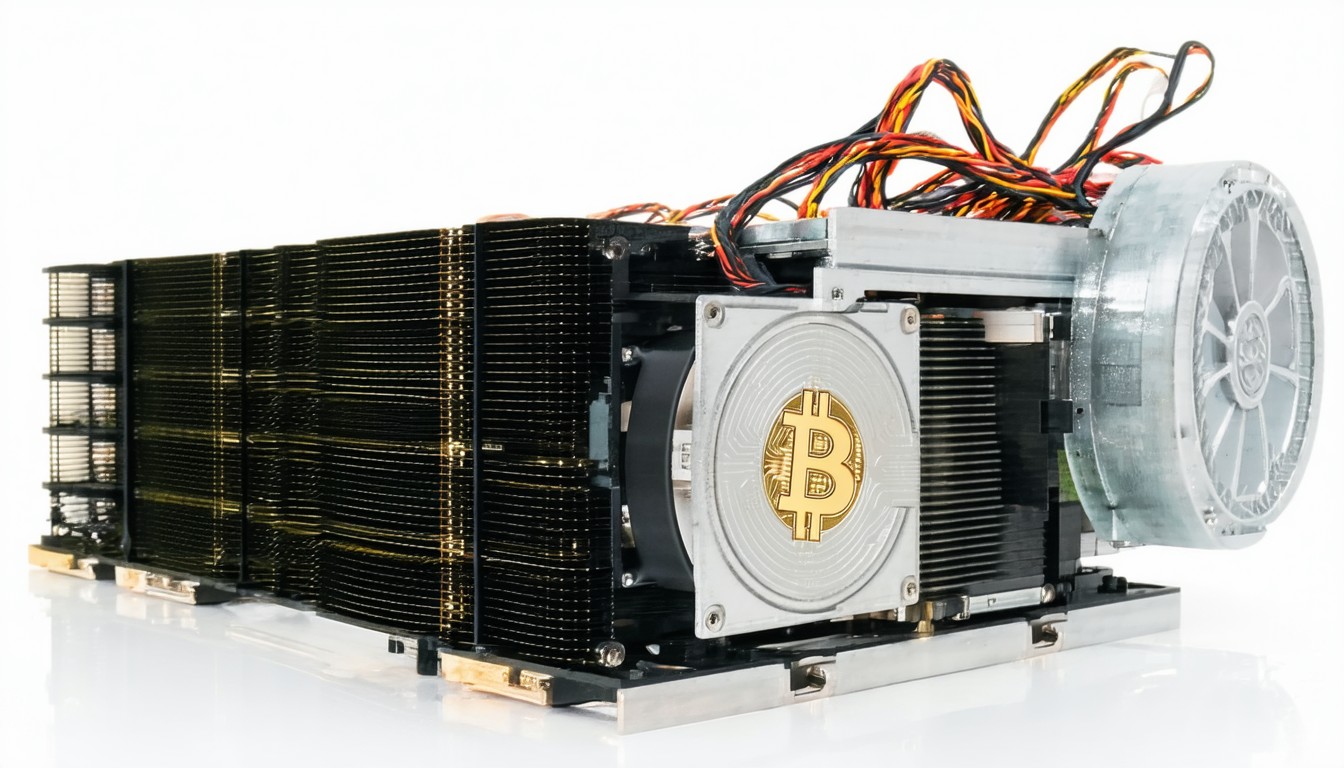
A high-performance ASIC miner (such as the Antminer S19 Pro, delivering up to 110 TH/s) boasts formidable power, but when matched against the network’s aggregate hash rate—often exceeding 400 EH/s—the odds can be daunting.
For example, with one S19 Pro, a miner’s chance of solving a block may be closer to one in several hundred thousand per block discovery. Some miners may operate fleets of ASICs or leverage lower energy costs (such as in regions with abundant hydroelectric supply), but the vast majority must recognize that bitcoin solo mining is, by nature, a high-risk endeavor.
“Solo mining remains the purist’s pursuit—where winning the block reward is not just about hardware, but also about stamina and sometimes a bit of luck,” notes blockchain analyst Nikhil Shah. “It’s an approach that magnifies both the risks and the potential returns.”
Beyond Hardware: The Cost of Operation
- Energy consumption: Mining hardware is energy-hungry. Effective solo miners usually seek electricity costs below $0.05 per kWh.
- Initial investment: ASIC units, infrastructure, and cooling can amount to significant capital upfront.
- Maintenance: Hardware downtime and maintenance can affect overall ROI.
For perspective, some solo miners capitalize on unique energy opportunities, such as surplus renewable energy or flared natural gas, to achieve cost advantages.
Getting Started: A Step-by-Step Blueprint for Effective Solo Mining
For those willing to proceed, a methodical approach increases the odds of success while minimizing unnecessary risks.
1. Assess Your Motivation and Risk Tolerance
Solo mining is not recommended for casual hobbyists seeking steady returns. It is best suited to those who value the thrill of the hunt, have access to competitive hardware and energy, and can tolerate prolonged periods without earnings.
2. Hardware Selection and Optimization
- ASICs over GPUs: Bitcoin mining’s current difficulty renders GPU and CPU mining infeasible for solo operators; modern ASIC miners are essential.
- Hashrate scale: Consider operating multiple ASICs to reasonably increase your probability of success.
- Cooling and infrastructure: Efficient cooling and robust electrical systems prevent downtime and protect hardware investment.
3. Node Setup and Wallet Security
- Run a full Bitcoin node: Required to participate directly in block discovery and transaction verification.
- Solo mining software: Consider open-source solutions like CGMiner or BFGMiner, configured to communicate with your node.
- Secure wallet setup: Use a hardware wallet or highly secure, air-gapped storage for receiving block rewards.
4. Monitor, Adjust, and Manage Costs
Track network difficulty, hardware status, and real-time profitability. Re-evaluate your solo mining setup as electricity rates or Bitcoin market conditions fluctuate.
5. Regulatory Considerations
Stay apprised of local energy, taxation, and cryptocurrency regulations. Some jurisdictions offer energy incentives for cryptocurrency mining, while others impose restrictions or higher tariffs.
Trends and Notable Success Stories
Despite long odds, solo mining occasionally makes headlines. In early 2022, a solo bitcoin miner reportedly discovered a block and received the full 6.25 BTC—worth hundreds of thousands of dollars at the time—using modest hardware. Such cases are rare, but they underscore the unique opportunity that solo mining represents, even as pools dominate the majority of hash power.
Meanwhile, strategic solo miners experiment with relocating rigs to exploit lower energy rates or use creative off-grid solutions. The industry’s evolution may see further solo breakthroughs, particularly as technology and renewable energy adoption advance.
Conclusion: Balancing Passion, Probability, and Pragmatism
Solo mining bitcoin is a venture for the determined and well-prepared. While the statistical odds are long, the appeal of winning an entire block reward has enduring allure. Efficiency, both in hardware and operational practices, remains the key. For those evaluating this path, a clear-eyed assessment of costs, risks, and motivations is essential. As the Bitcoin network grows and changes, solo mining’s role echoes the original spirit of discovery—demanding both technical prowess and a measure of fortitude.
FAQs
What is solo mining and how does it differ from pool mining?
Solo mining involves mining bitcoin independently, not joining a pool. Unlike pooled mining, where payouts are smaller but more consistent, solo miners receive the entire block reward if they find a block, though such wins are rare for most individuals.
Can solo mining ever be profitable?
Solo mining can be profitable in rare cases, often when a miner has access to highly efficient hardware and very low-cost electricity. However, most solo miners participate for reasons beyond just steady profit, such as independence and the potential for a significant payout.
What hardware is required for bitcoin solo mining?
To compete meaningfully, solo miners need modern ASIC miners with high hash rates (such as the Antminer S19 or newer models). GPUs and CPUs are now insufficient for bitcoin solo mining due to the network’s elevated difficulty.
How long does it typically take for a solo miner to find a block?
There’s no predictable time frame; with modest hardware, it might take months or even years to successfully mine a block, or one might never find a block at all. It’s a high-variance, probabilistic process.
Are there extra risks with solo mining?
Yes, in addition to financial risks—such as no guaranteed reward—solo miners face higher exposure to downtime, security concerns, and regulatory changes that may impact their operations or electricity costs.
Do I need to run a full node for solo bitcoin mining?
Yes, running a full Bitcoin node is essential for solo mining, as it allows miners to validate transactions and attempt to discover blocks directly without relying on a third party.