
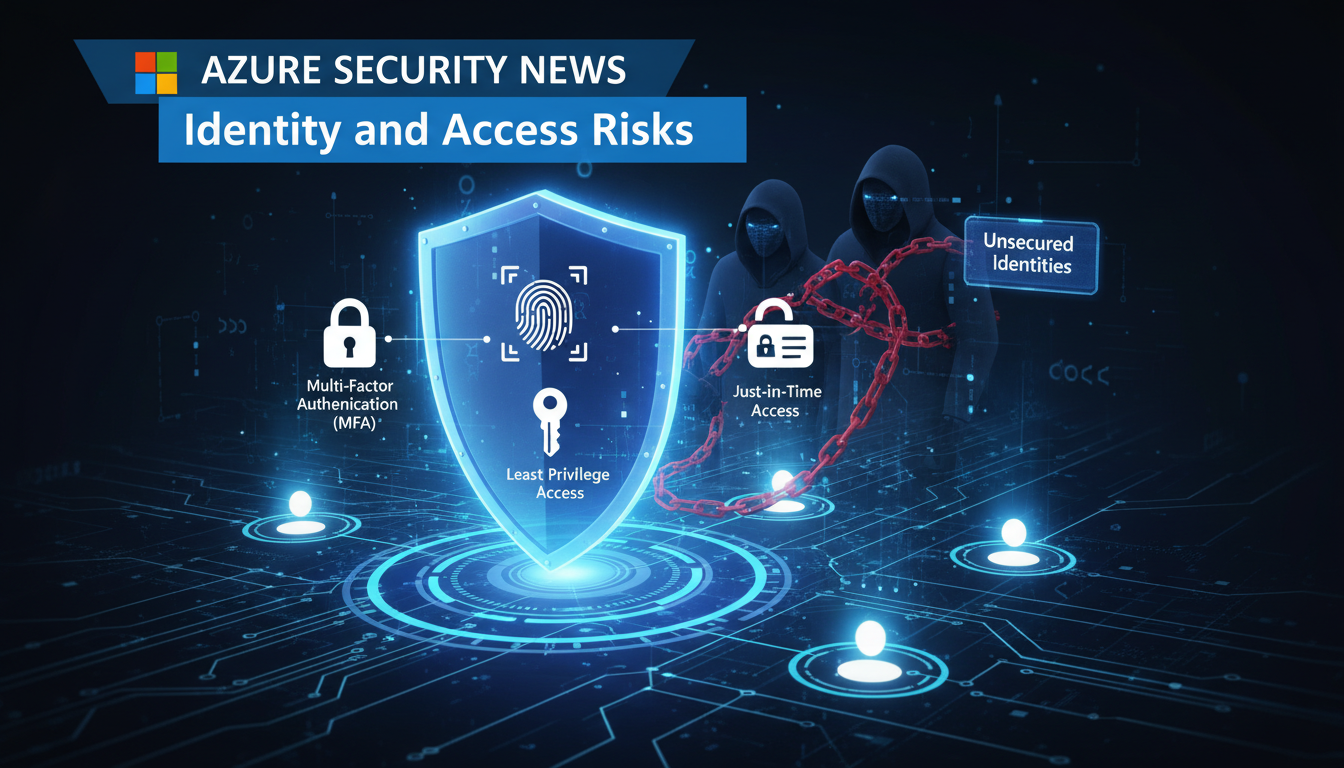
Azure environments remain a magnet for identity and access threats, especially as attackers exploit both human and machine vectors. Recent high-severity vulnerabilities—like VMs exposed via Windows Admin Center (CVE‑2026‑20965), tenant-wide impersonation via Entra ID actor tokens (CVE‑2025‑55241), and mandatory enforcement changes—highlight escalating risks. Effective defense demands immediate patching, phishing-resistant MFA, least privilege governance, and vigilant identity governance across all layers.
Emerging Vulnerabilities in Azure Identity Systems
Tenant-Wide Impersonation via Actor Tokens (CVE‑2025‑55241)
One of the most alarming flaws discovered affects Microsoft Entra ID. The CVE‑2025‑55241 vulnerability allowed protection bypass by leveraging legacy actor tokens issued from a developer’s tenant to impersonate any user—including Global Administrators—in any other tenant. This risk was amplified by poor validation in the Azure AD Graph API. Attackers could bypass MFA and Conditional Access, and disturbingly, the exploit generated no audit logs .
Microsoft patched this vulnerability in mid‑July 2025, with formal disclosure following in September. No exploitation in the wild has been reported, but the severity score was 10/10—highlighting both scope and stealth .
Windows Admin Center Token Flaw (CVE‑2026‑20965)
A related high-severity flaw was uncovered in Windows Admin Center’s Azure Single Sign-On. CVE‑2026‑20965 allowed malicious token manipulation—combining stolen WAC.CheckAccess tokens with forged Proof-of-Possession tokens—to gain unauthorized access to Azure VMs and Azure Arc-managed systems across tenants .
This vulnerability was patched in Windows Admin Center Azure Extension v0.70.00 on January 13, 2026, and remediation should be prioritized for vulnerable installations .
Strengthening Identity Hygiene: Policies and Configuration
Mandatory MFA Enforcement and Phishing-Resistant Methods
As of October 1, 2025, Azure began enforcing multifactor authentication for all users across CLI, PowerShell, REST API, and Infrastructure-as-Code tools. Internal telemetry indicates that this policy has thwarted more than 99% of account compromise attempts .
Organizations are urged to adopt phishing-resistant methods—such as FIDO2 security keys, passkeys, Windows Hello for Business, or certificate-based authentication—as baseline protection .
Jailbreak/Root Detection in Microsoft Authenticator
Starting February 2026, Microsoft Entra credentials will no longer function on jail-broken or rooted devices. The Authenticator app will detect such environments, erase stored credentials, and block access—strengthening endpoint identity safety .
Migration to Azure RBAC for Key Vault Protection
A policy shift is underway: Azure RBAC will become the default access control model for new Key Vaults beginning with API version 2026-02-01. Legacy access policies will still function in existing vaults, but organizations must explicitly configure them if needed. Migration to RBAC is strongly recommended .
Real-World Risks in Identity and Access Management
Hybrid Identity & Misconfiguration Risks
Misconfigured hybrid identity setups are a growing concern. Federated identity systems like AD FS often serve as blind spots with complex configurations that attackers can exploit. Microsoft strongly recommends shifting to native Entra ID authentication, monitored with tools like Entra Connect Health and SIEM integration .
Service accounts synced from on-premises systems are also frequently targeted. When such accounts are compromised, attackers can use them to access Entra ID environments—especially if MFA or PIM isn’t enforced. Microsoft recommends using cloud-native identities for privileged roles and restricting account sync from local AD .
Rising Threats: Token Theft and Phishing
Token theft—whether via credential-stealing malware or adversary-in-the-middle (AiTM) attacks—continues to be a serious issue. Attackers can harvest tokens that have already passed MFA, then reuse them to access protected resources. Global Administrator accounts are particularly at risk, and detection can be difficult .
Excess Privileges and Application Overreach
Privilege mismanagement persists in both human and machine identities. Service principals and apps often get broad access that exceeds their operational needs. Microsoft recommends using least privilege, favoring certificates over client secrets, and opting for Managed Identities when possible .
Additionally, OAuth consent phishing remains a risk: attackers trick users into granting excessive permissions to malicious apps. Access governance—using entitlement management and access reviews—should be used to mitigate this threat .
AI, Machine Identities, and Governance
The Human–Machine Identity Blur and Governance Framework
Machine identities—such as service principals and workload identities—are outpacing human users in Azure environments. A unified identity governance model, which treats identities as a continuum rather than a binary, can reduce security incidents by nearly half and improve response time significantly .
AI-Powered Conditional Access Optimization
Results from a randomized controlled study using AI agents for Conditional Access policy management demonstrated remarkable gains: 48% higher accuracy and 43% faster task completion in policy merging, zero-trust baseline detection, rollout planning, and user alignment .
Conclusion: A Multi-Layered Defense Is Imperative
Azure identity and access risks are both sophisticated and ubiquitous. From critical vulnerabilities like CVE‑2025‑55241 and CVE‑2026‑20965 to systemic threats born from misconfigurations, privilege misuse, and token theft, organizations must balance policy, patching, governance, and security culture to reduce exposure. Mandatory MFA, least privilege enforcement, endpoint integrity, hybrid identity simplification, and unified identity governance form a robust defense strategy.
FAQs
Q: What immediate actions should I take regarding CVE‑2025‑55241?
Apply the July 2025 patch and ensure the legacy Azure AD Graph API is fully decommissioned or replaced by Microsoft Graph. Review tenant audit settings to detect any anomalies.
Q: How do I know if I’m affected by the Windows Admin Center vulnerability (CVE‑2026‑20965)?
Check if you’re using Windows Admin Center with Azure SSO before version 0.70.00. If so, upgrade immediately to mitigate unauthorized VM or Arc access risks.
Q: Why is jail-break detection in Microsoft Authenticator important?
It prevents compromised or tampered devices from retaining or using Entra credentials, reducing device-based attack surfaces significantly.
Q: How can I better secure machine identities and workload permissions?
Use least privilege principles, employ Managed Identities instead of client secrets, and conduct regular access reviews to ensure each identity has only what it needs.
Q: What strategies reduce identity-related threats in hybrid environments?
Shift to native Entra ID authentication, disable AD FS where possible, secure hybrid sync, and enforce MFA and PIM consistently across all identities.