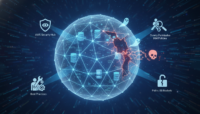


Recent cyber attacks have exposed increasingly sophisticated tactics and novel malware strains that pivot beyond traditional threat horizons, exploiting infrastructure, supply chains, AI capabilities, and human vulnerabilities in unexpected ways.
Emerging Malware and Evolving Attack Methods
DNS-Based Covert Campaigns Disrupt Web Traffic
A stealthy malware operation dubbed Detour Dog is manipulating DNS TXT records on over 30,000 legitimate websites to covertly redirect traffic and deliver payloads such as the Strela Stealer—without touching users’ devices. This server-side method bypasses traditional antivirus detection and highlights how DNS is becoming a weaponized infrastructure.
Infostealer Expands to Mac Ecosystems
Microsoft has flagged a growing wave of infostealer malware targeting macOS, including threats like DigitStealer, MacSync, and AMOS. Attackers distribute these through fake installers, phishing, and deceptive ads, aiming to harvest credentials, keychains, and tokens, while increasingly misusing platforms like WhatsApp for propagation.
Virtual Machines as a Malicious Enabler
Ransomware groups—such as LockBit, Qilin, and BlackCat—are now renting shared virtual machines from bulletproof hosting providers to launch large-scale attacks cheaper and with plausible deniability. Ironically, the reuse of static hostnames within these VMs allows defenders to trace activity, undermining attacker anonymity.
Rise of Advanced RATs and RaaS Groups
Early 2026 saw the emergence of new threats like:
- CrashFix, an evolution of ClickFix, which manipulates browser crashes via fake ad-block extensions to trick users into running RAT commands.
- DesckVB RAT v2.9, a modular .NET-based Windows RAT with plugins for keylogging, webcam access, and AV detection easement.
- Vect, a mature Ransomware-as-a-Service group using ChaCha20-Poly1305 encryption, targeting Windows, Linux, and VMware ESXi across regions like Brazil and South Africa.
Cloud-Native Malware Frameworks
VoidLink is a newly discovered malware framework targeting cloud environments, built in Zig, Go, and C. It adapts to containerized platforms like Kubernetes and Docker, leveraging encrypted communications through a custom protocol (“VoidStream”) and offering plugins for persistence, credential theft, and stealthy reconnaissance.
Insider Threats and Social Engineering Explosions
There’s been a notable rise in attacks involving dissatisfied insiders recruited via social media or professional platforms, now accounting for roughly one-third of data breaches in 2025. Other attacks are using voice phishing (“vishing”) and homoglyph spoofing (like “rn” instead of “m”) to trick users and harvest credentials from enterprise SSO systems.
Supply Chain and Dependency Attacks
Cybercriminals are increasingly compromising package repositories—recent incidents involve npm and PyPI packages injected with wallet stealers and RATs using legitimate developer credentials. Moreover, AI-powered malware such as PromptFlux and PromptSteal represent a shift toward adaptive, generative-AI-enabled cyber threats.
AI’s Dual Role: Weapon and Shield
Malicious use of AI is accelerating and widespread. Organizations report soaring AI-generated phishing, while defenders deploy AI-driven monitoring and XDR tools. Academic research underscores threats from adversarial AI, deepfakes, autonomous malware agents, and “runaway” AI agents in cyber-physical systems.
Real-World Impact & Industry Responses
Olympic-Linked DDoS Attacks
Pro-Russian hacker group NoName 057 launched DDoS attacks aimed at disrupting digital infrastructure around the 2026 Winter Olympics in Italy. The nation’s cybersecurity agency repelled the attacks, showcasing how politically motivated cyber disruptions remain a growing threat during high-profile events.
Massive Malware Surge Across Sectors
Economic data shows a 131% year-over-year spike in malware-laden email campaigns, supported by generative AI’s ability to craft convincing phishing content. Still, defenders are investing heavily in AI-powered detection, indicating an evolving arms race in cyber defense.
Nations Under Fire
India reported a staggering 265 million cyberattacks in 2025, prompting new initiatives like digital risk protection and ransomware recovery services. Meanwhile, advanced espionage campaigns—like China’s Salt Typhoon targeting U.S. infrastructure and government—highlight the geopolitical ramifications of cyber intrusions.
Expert Insight
“Attack vectors are expanding faster than many realize… Attackers are increasingly using generative AI and automation to identify vulnerabilities, craft more convincing phishing lures, and orchestrate multistage intrusions with minimal human oversight.”
—Daniel Hofmann, CEO, Hornetsecurity
This captures the dual-use nature of AI—in both magnifying threat sophistication and enabling more robust defenses.
Conclusion
Modern cyberattacks are blurring technical and human boundaries—DNS abuse, AI-powered malware, cloud-native RAT frameworks, and insider recruitment underscore a multi-dimensional threat landscape. At the same time, defenders are responding with greater reliance on AI, behavioral analytics, and threat intelligence. To stay ahead, organizations must embrace layered defenses that integrate human vigilance, AI-augmented detection, supply chain scrutiny, and cross-domain collaboration.
FAQs
What makes Detour Dog unique among malware campaigns?
Detour Dog operates entirely via DNS TXT records on compromised websites, delivering payloads without touching the victim’s device and evading traditional antivirus detection with its completely server-side operation.
How is infostealer malware evolving beyond Windows?
Infostealers like DigitStealer and AMOS are now targeting macOS via deceptive install packages and malicious ads, aiming to extract browser data, credentials, and developer keys—highlighting a cross-platform shift in tactics.
Why are ransomware groups using shared virtual machines?
Attackers rent inexpensive VMs from bulletproof hosting providers to scale operations while concealing identities. Ironically, reused hostnames across these VMs can help defenders trace malicious activities.
What threats are emerging in cloud-native and AI-driven environments?
Threats like VoidLink exploit container and cloud infrastructure with encrypted command channels, while AI-powered malware (e.g., PromptFlux) autonomously adapt and evolve. Defenders face advanced attacks across CPS, deepfakes, and autonomous AI agents.
How are insider threats and social engineering trending?
Insider-assisted breaches rose sharply in 2025, now comprising nearly a third of data-loss incidents. Attackers also employ sophisticated social engineering like voice phishing and homoglyph-based domain spoofing to steal credentials.